Final Rail Trail Phase Opening Soon
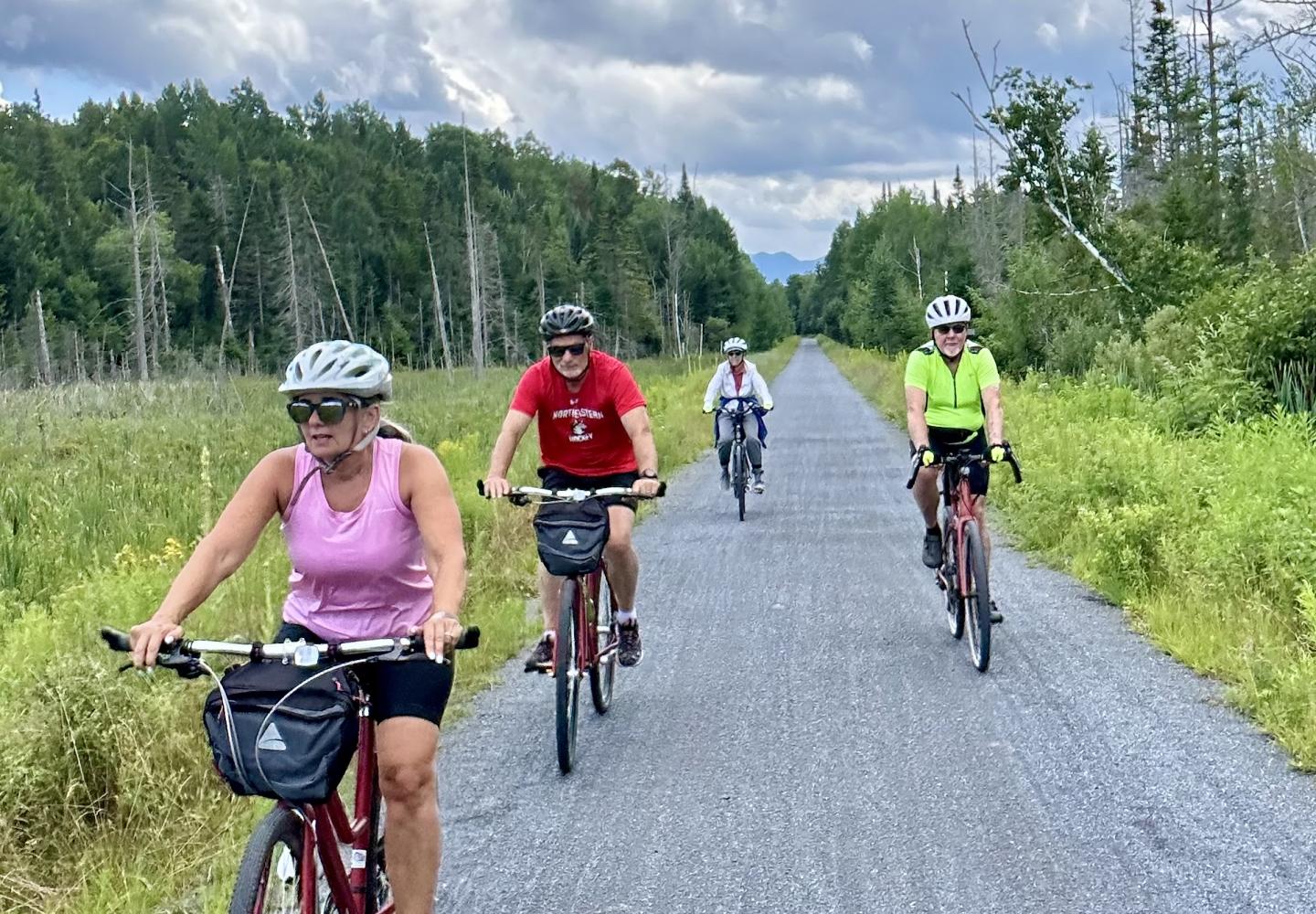
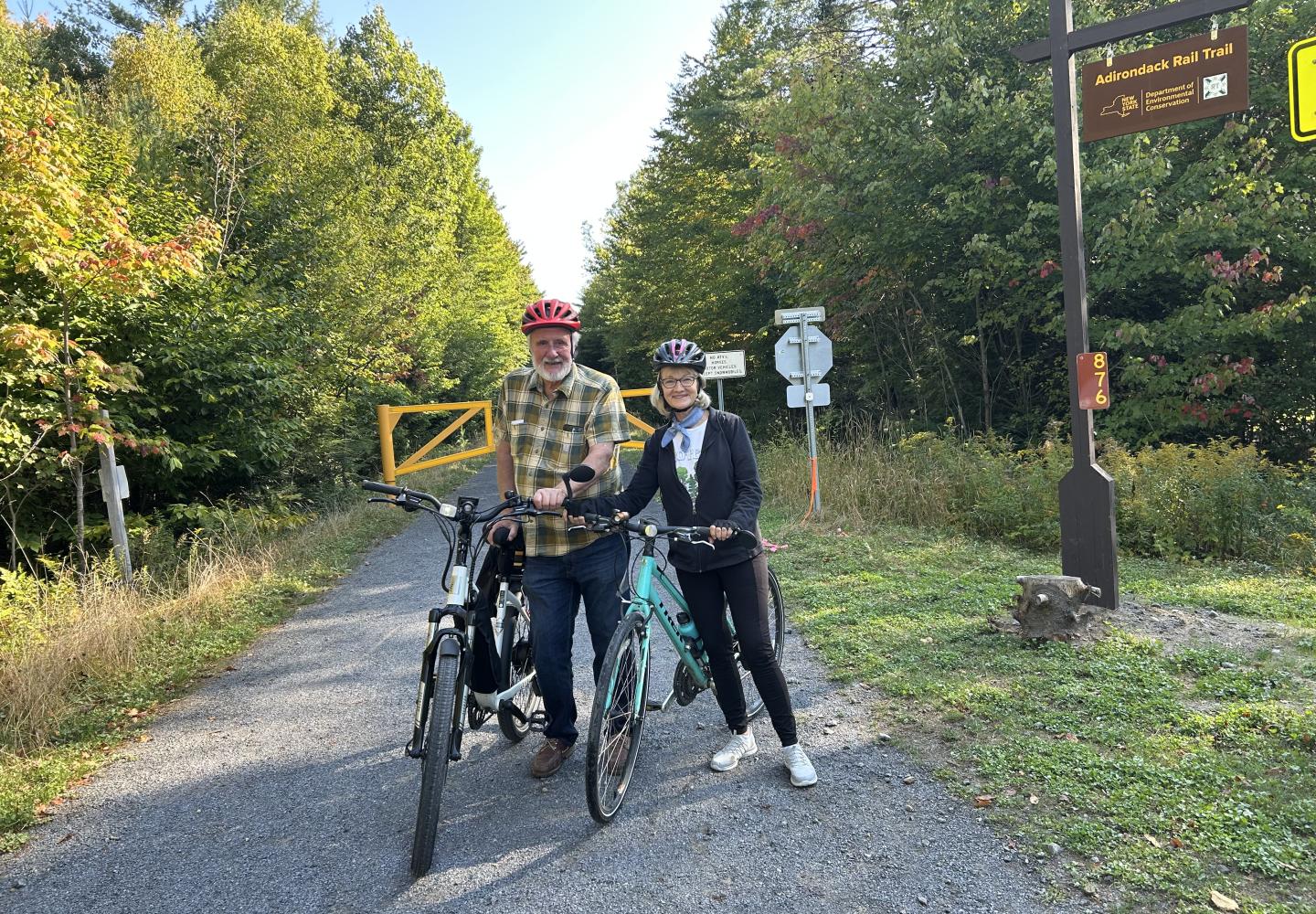
The Adirondack Rail Trail has been a big hit with cyclists and other users, and after the impending completion of the third (and final) phase its success is bound to grow.
The 9-mile stretch from Floodwood Road to Tupper Lake likely will open to the public in early October, according to the state Department of Environmental Conservation, which manages the rail trail.
People should not bike or walk on the Floodwood-to-Tupper section until DEC officially opens it, said Lori Severino, a department spokeswoman.
“The Adirondack Rail Trail has been an exciting new outdoor recreational asset for the local communities and for visitors to experience and explore the natural beauty of the Adirondacks,” Severino said in an e-mail to BikeADK. “When complete, the trail will provide a 34-mile-long accessible trail that will connect local communities to each other and to the Forest Preserve lands in between. The trail provides a new way to enjoy the incredible resources of the Adirondack Park.”

Once the rail trail is finished, cyclists will be able to ride from Lake Placid to Tupper Lake, passing through Saranac Lake and Lake Clear on the way. The trail will end at the depot in “downtown” Tupper Lake. However, cyclists will be able to continue on a local bike path for a few miles to get to Tupper’s “uptown.” Both parts of the village offer a variety of services.
The first 10 miles of the rail trail, from Lake Placid to Saranac Lake, opened in December 2023. The section from Saranac Lake to Floodwood Road was finished last summer.
The Adirondack Rail Trail Association (ARTA) has installed trail counters in Lake Placid and Saranac Lake to gauge usage. The devices are not perfect, but they give a sense of the trail’s popularity.
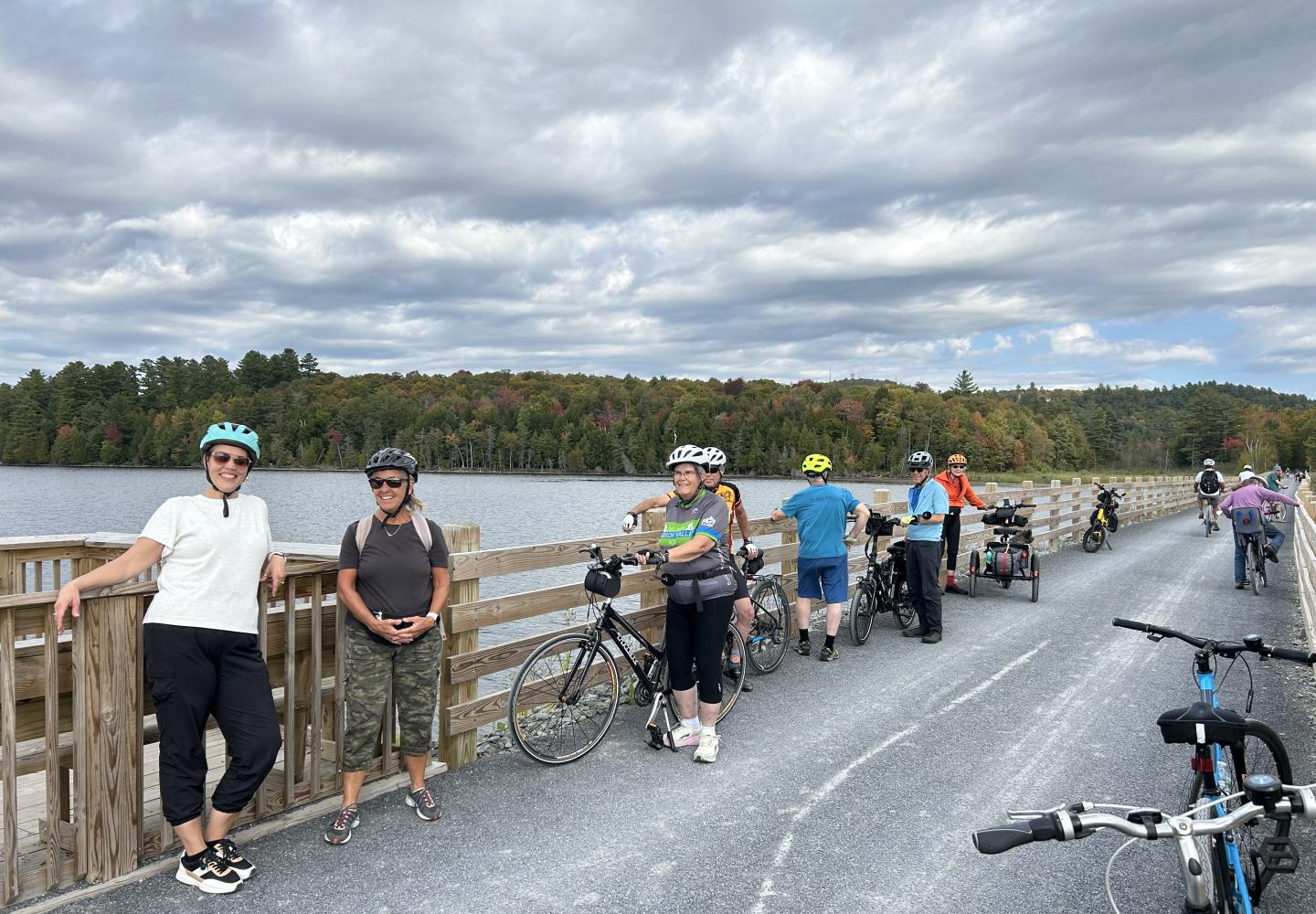
Over the year ending September 21, the devices counted 159,769 “passes” by trail users, according to Julia Goren, ARTA’s executive director. “Passes don't necessarily mean individuals,” she said “It could be the same individual riding back and forth.”
Also, cyclists and hikers who start in Saranac Lake and head to the Lake Colby causeway--a popular destination--or points west do not pass either device and so are not counted.
Goren said 60 percent of the passes were in Saranac Lake. “The highest single-use day was the Sunday of Labor Day weekend,” she said in an e-mail. “The trends are higher this year than last (substantially). We continue to see peak use in Lake Placid between 10 a.m. and 4 p.m., in Saranac Lake from noon to 5 p.m.”
ARTA plans to install a third counter in Tupper Lake next year.
Once Phase 3 opens, work on the rail trail will not stop. DEC plans to install kiosks, benches, mile markers, and signs along the trail. Some signs will be educational, informing users of the region’s human and natural history. Others will mark highway or trail junctions, direct people to local amenities, or provide traffic-safety information.
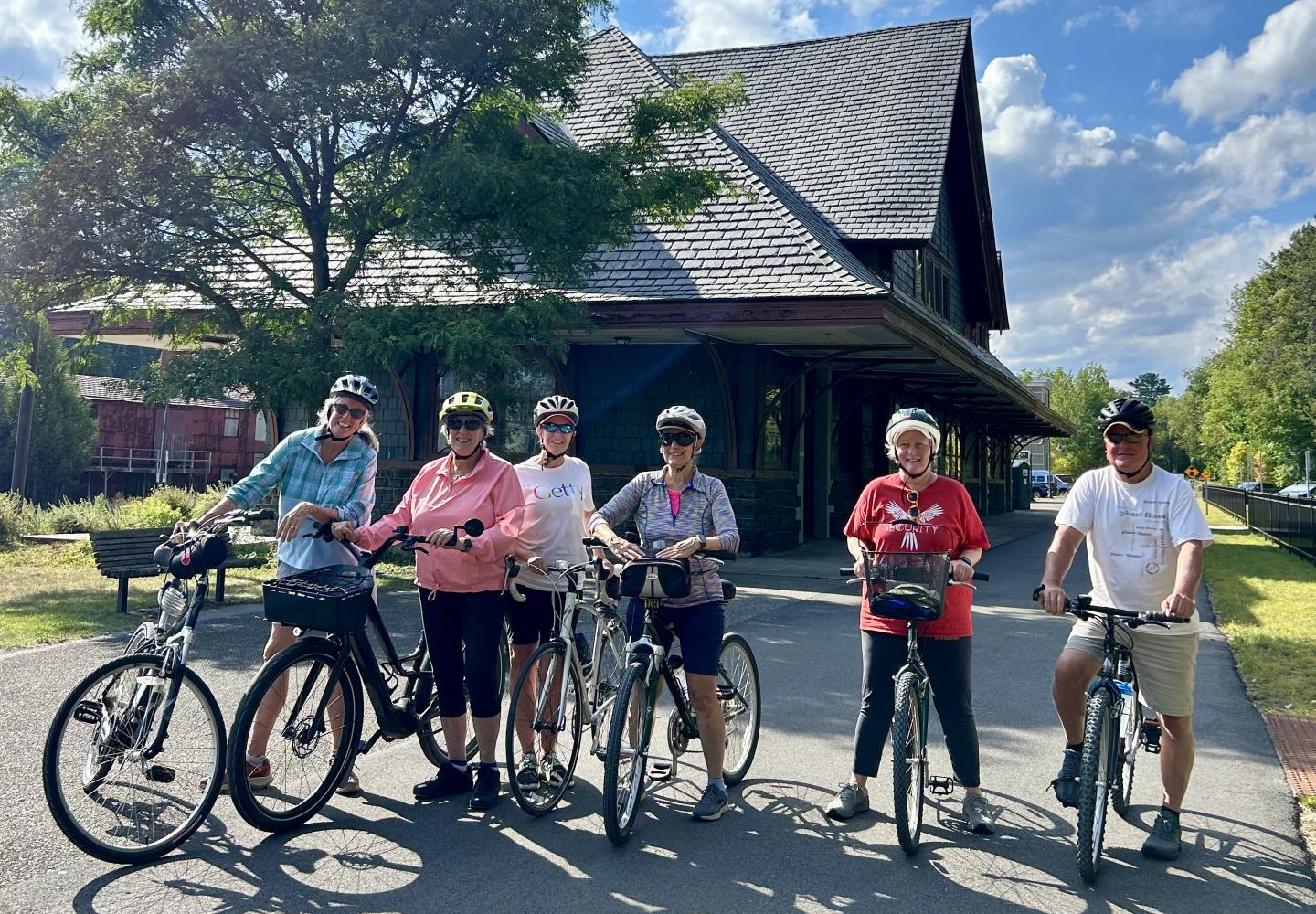
DEC also has been rehabilitating the Saranac Lake depot for reuse. Next year it will upgrade the electrical, mechanical, and environmental systems. The department has solicited ideas for repurposing the building.
ARTA, too, has plans for 2026. It will install bear-proof trash cans along the trail (with funding from North Elba’s cannabis-tax program). In the spring, the non-profit organization will publish an updated edition of its trail map with ads from local businesses.
ARTA also plans to expand its Trail Ambassador program, which it began this past summer. Volunteers work on the trail and talk to users. the group also has begun selling rail-trail shirts at local stores.
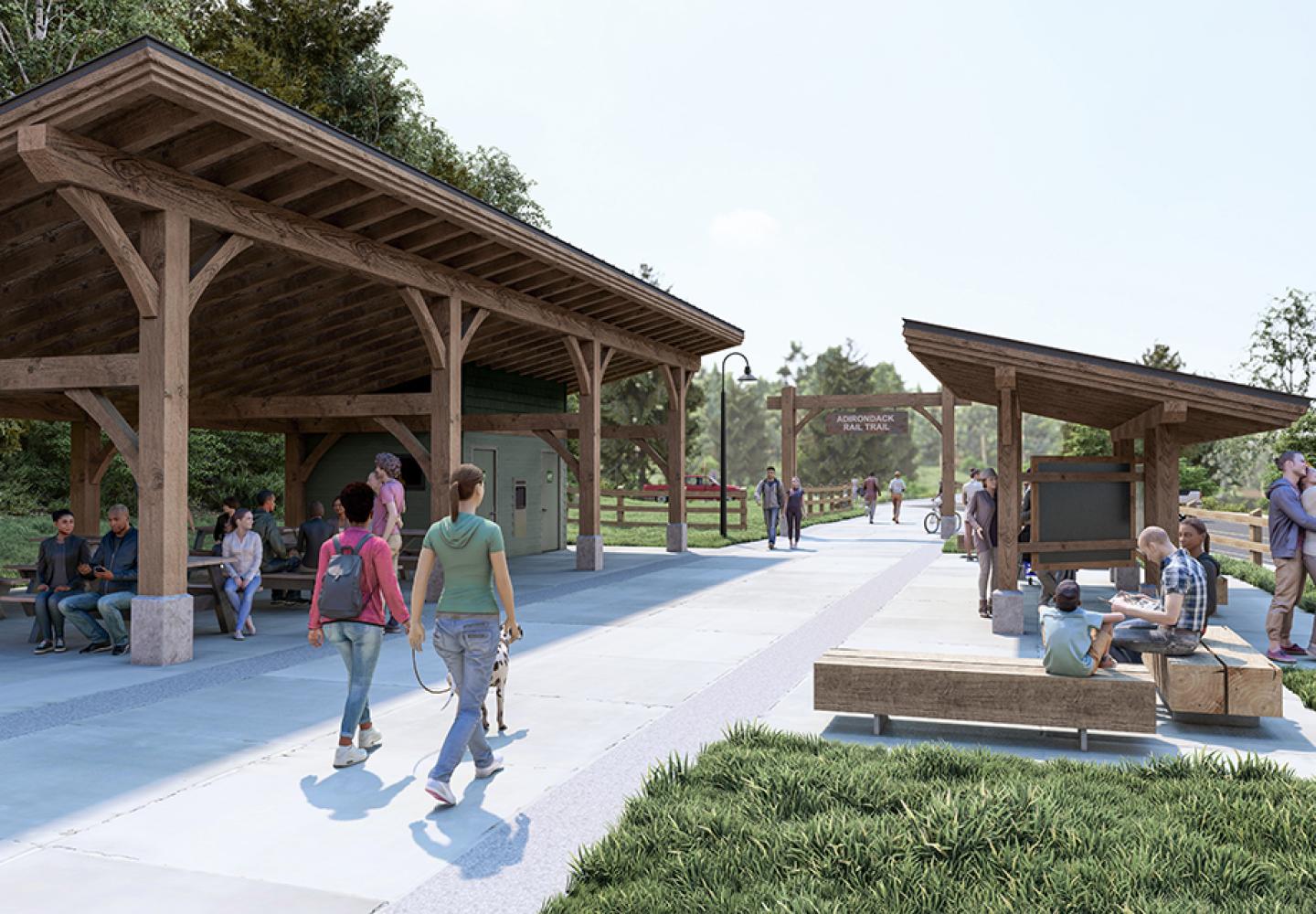
Another non-profit group, the Open Space Institute, is hiring a contractor to build a parking lot, pavilion, and restrooms near the Lake Placid Depot (which is now a history museum). Work is expected to begin in the spring and finish next fall. “Visitors will be able to enjoy an inviting parklike entrance to the Adirondack Rail Trail,” said Siobhan Gallagher Kent, an OSI spokeswoman.
Farther down the road, DEC plans to build a bike trail connecting the rail trail to the Fish Creek and Rollins Pond State Campgrounds. This project is in the early planning stage, and no construction schedule has been set. Meantime, it is possible to ride a mountain bike from the campgrounds to Floodwood Road on existing trails and then get on the rail trail.